


 17 June 2025
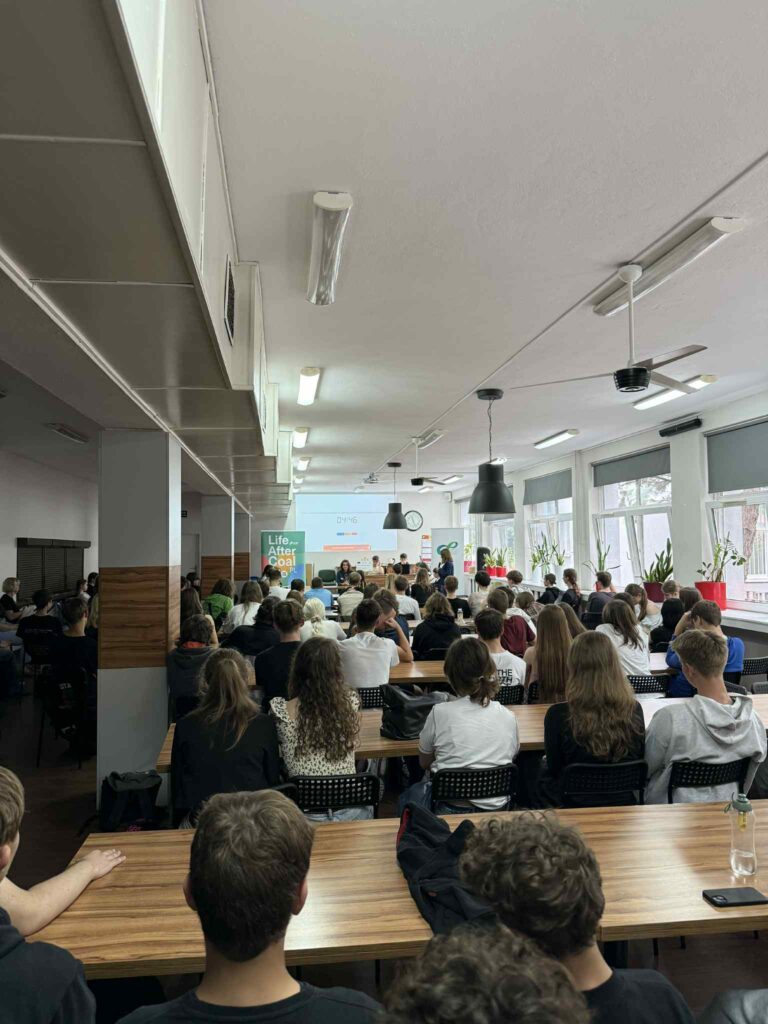
On June 16, 2025, an Oxford-style debate was held at the K.K. Baczyński High School No. 2 in Konin, drawing a full house of listeners. Interest in the event exceeded expectations—the auditorium was packed to capacity, which only served to underscore how important and timely the topic under discussion was.
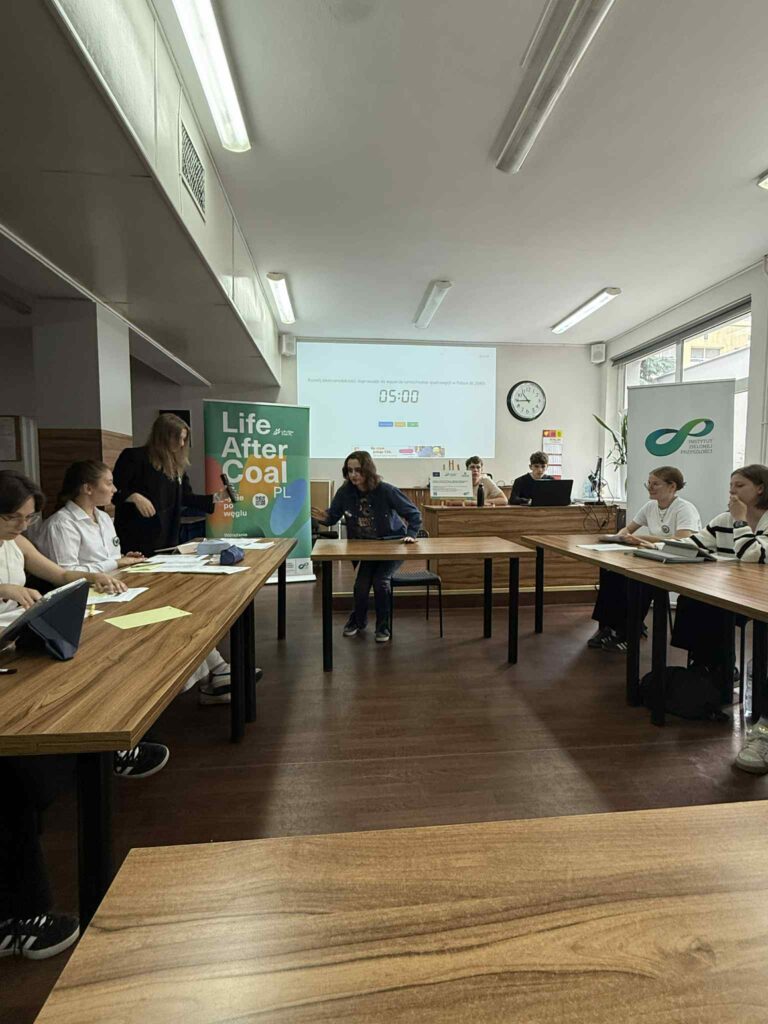
Young debaters from the high school Oxford debate club tackled the motion: “The development of electromobility will lead to the phasing out of internal combustion engine cars in Poland by 2040”. In accordance with the rules of the Oxford-style debate, one side—the affirmative—defended the motion, while the opposing side sought to refute it.
The debate was lively, full of witty retorts and strong arguments that addressed not only data and technological forecasts, but also the emotions and narratives present in public and online discourse. Participants demonstrated a deep understanding of the topic and an ability to recognize the social, economic, and environmental aspects of Poland’s transportation transition. The debate also served as an opportunity to discuss how young people view the future of transportation in the context of climate change and local post-coal transitions. The audience—composed of students, teachers, and project representatives—contributed numerous questions and comments that enriched the discussion.
In the end, the jury ruled in favor of the proposal—albeit by a narrow margin. It was their arguments that convinced the judges that a scenario in which internal combustion engine cars are completely replaced by electric vehicles in Poland by 2040 is not only possible but is also being shaped by current trends.
The event demonstrated that the young residents of Konin—a city in the midst of transitioning away from lignite—are engaged participants in the debate about the future, ready not only to analyze data but also to speak out boldly on issues that affect their generation.
The debate was part of the educational activities of the Life After Coal project, which aims to support the just transition of mining and energy regions, with a particular focus on achieving climate neutrality in Greater Poland by 2040.
 7 May 2026